Nigeria's upstream oil and gas industry is entering one of its most active investment cycles in years — and the numbers behind it are worth paying attention to.
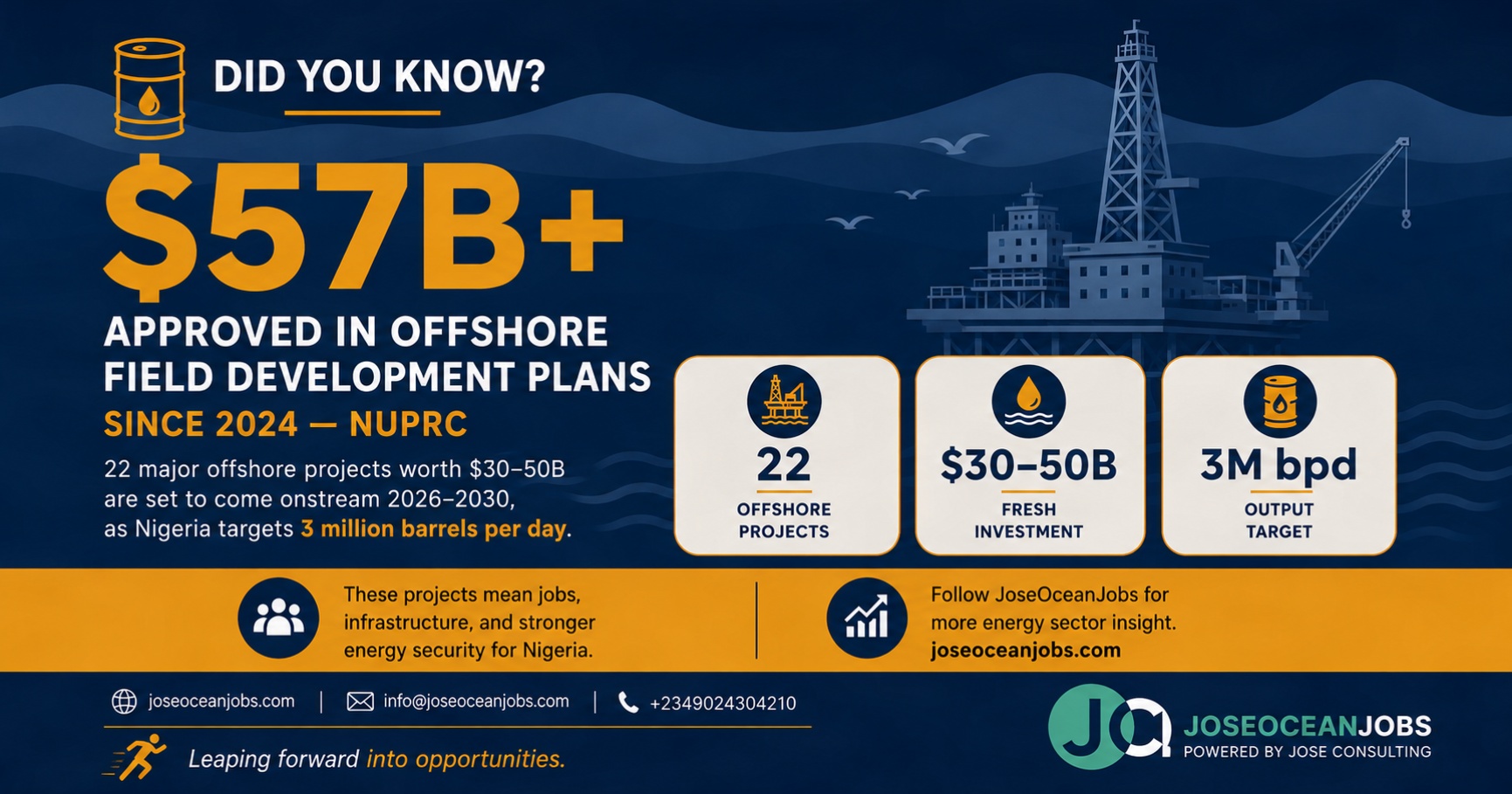
At the Society of Petroleum Engineers' Nigeria Annual International Conference and Exhibition (NAICE 2026) in Lagos, the Nigerian Upstream Petroleum Regulatory Commission (NUPRC) disclosed that it has approved more than **$57 billion** in offshore Field Development Plans (FDPs) since 2024. Speaking on behalf of NUPRC Chief Executive Oritsemeyiwa Eyesan, Executive Commissioner Enorense Amadasu confirmed that several of these approvals have already progressed to Final Investment Decisions (FIDs) the stage at which a project moves from planning into actual construction and development.
22 Projects, One Ambitious Target
Looking ahead, NUPRC expects 22 major offshore projects to come onstream between 2026 and 2030, with an estimated investment potential of $30 to $50 billion. That's a substantial capital inflow concentrated in a five-year window, and it reflects sustained regulatory reform and improved investor confidence following the Petroleum Industry Act (PIA).
According to NUPRC, these investments are expected to:
- Increase crude oil and gas production
- Create jobs across the upstream value chain
- Expand critical infrastructure
- Strengthen Nigeria's energy security
- Reinforce Nigeria's position as a leading global destination for upstream investment
Why This Matters Beyond the Numbers
Headline figures like $57 billion and $30–50 billion can feel abstract, but they translate into something very concrete for the industry: more offshore platforms, more drilling campaigns, more marine and logistics support operations, and more demand for the trained professionals who keep all of it running safely and efficiently.
Offshore energy development doesn't happen in isolation — it depends on a deep bench of engineers, technicians, marine crew, and certified safety personnel. As Nigeria's offshore pipeline scales up through the rest of the decade, the sectors that support it — training, certification, workforce development — will scale with it.
A Sector Building Momentum
NUPRC's disclosure comes alongside other recent developments in Nigeria's upstream space, including the ongoing 2026 licensing round and continued growth in domestic crude supply compliance. Taken together, they point to a period of sustained activity rather than a single isolated announcement — a sector that is actively rebuilding investor confidence after years of underinvestment.
For professionals and organizations working across Nigeria's energy landscape, the message from NUPRC is clear: the next four years will bring real, measurable growth — and with it, real opportunity.
Written by
JCL Editorial
Editorial team covering maritime hiring trends, offshore workforce policy, and certification updates relevant to JOSEOCEANJOBS candidates and employers.