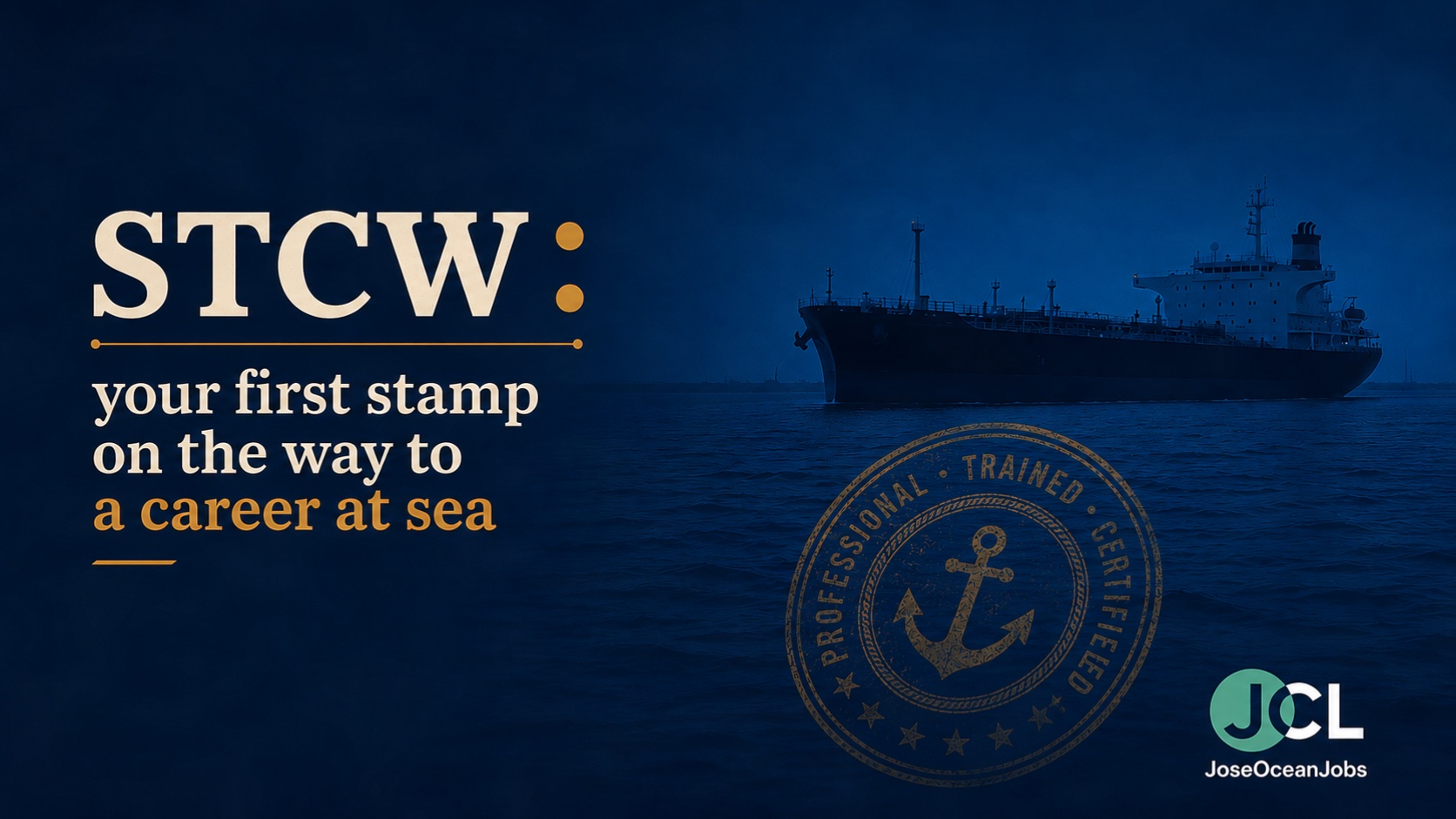
If you're considering a career at sea, there's one certification you'll need before anything else: STCW. It's the starting point for every seafarer, regardless of role, vessel type, or nationality — and understanding it early can save you time, money, and confusion as you plan your maritime career path.
This guide breaks down what STCW is, what it covers, how to get certified, and why employers treat it as a non-negotiable first step.
What Is STCW?
STCW stands for Standards of Training, Certification and Watchkeeping. It's an international convention, established by the International Maritime Organization (IMO), that sets minimum safety and competency standards for seafarers across the globe.
Unlike company-specific training or regional certifications, STCW is universally recognized. A seafarer certified in one country can present their STCW credentials to employers anywhere in the world and be understood as meeting the same baseline standard.
This is what makes it foundational: it's the common language of readiness across the entire maritime industry.
What Does STCW Basic Safety Training Cover?
STCW basic safety training is structured around four core modules:
1. Personal Survival Techniques
Covers how to respond during emergency situations at sea, including abandoning ship procedures, use of survival craft and life-saving equipment, and personal flotation techniques.
2. Fire Prevention & Fire Fighting
Teaches seafarers how to recognize fire hazards onboard, take preventive measures, and respond effectively in the event of a fire — critical knowledge in an environment where outside emergency help isn't immediately available.
3. Elementary First Aid
Provides basic medical response skills, enabling crew members to treat injuries and stabilize a colleague until more advanced medical care can be reached.
4. Personal Safety & Social Responsibility
Builds understanding of onboard safety culture, teamwork in high-risk and confined environments, and the shared responsibility every crew member carries for collective safety at sea.
Why Employers Require STCW First
Vessels operate far from immediate emergency services, which means every crew member must be able to respond competently to safety risks from day one. Shipping companies can't take a chance on candidates who haven't demonstrated a baseline understanding of survival, fire response, and safety awareness.
This is why STCW isn't evaluated alongside your CV — it's checked before your CV is even reviewed.
Without an STCW certificate, most candidates will face:
- No shortlisting for onboard positions
- No progression to interview stage
- No eligibility for sign-on, regardless of prior experience in other industries
In short: STCW is what makes every other qualification on your CV relevant to a maritime employer.
How to Get STCW Certified
STCW basic safety training is delivered through accredited maritime training providers and combines classroom instruction with hands-on, practical assessment. Training typically spans a few days and covers all four core modules listed above.
When choosing a training provider, look for:
- Accreditation recognized by maritime authorities in your target country or region
- Practical, hands-on components — not just theory-based instruction
- Valid certification that is internationally recognized, not limited to a single company or region
STCW and Your Maritime Career Path
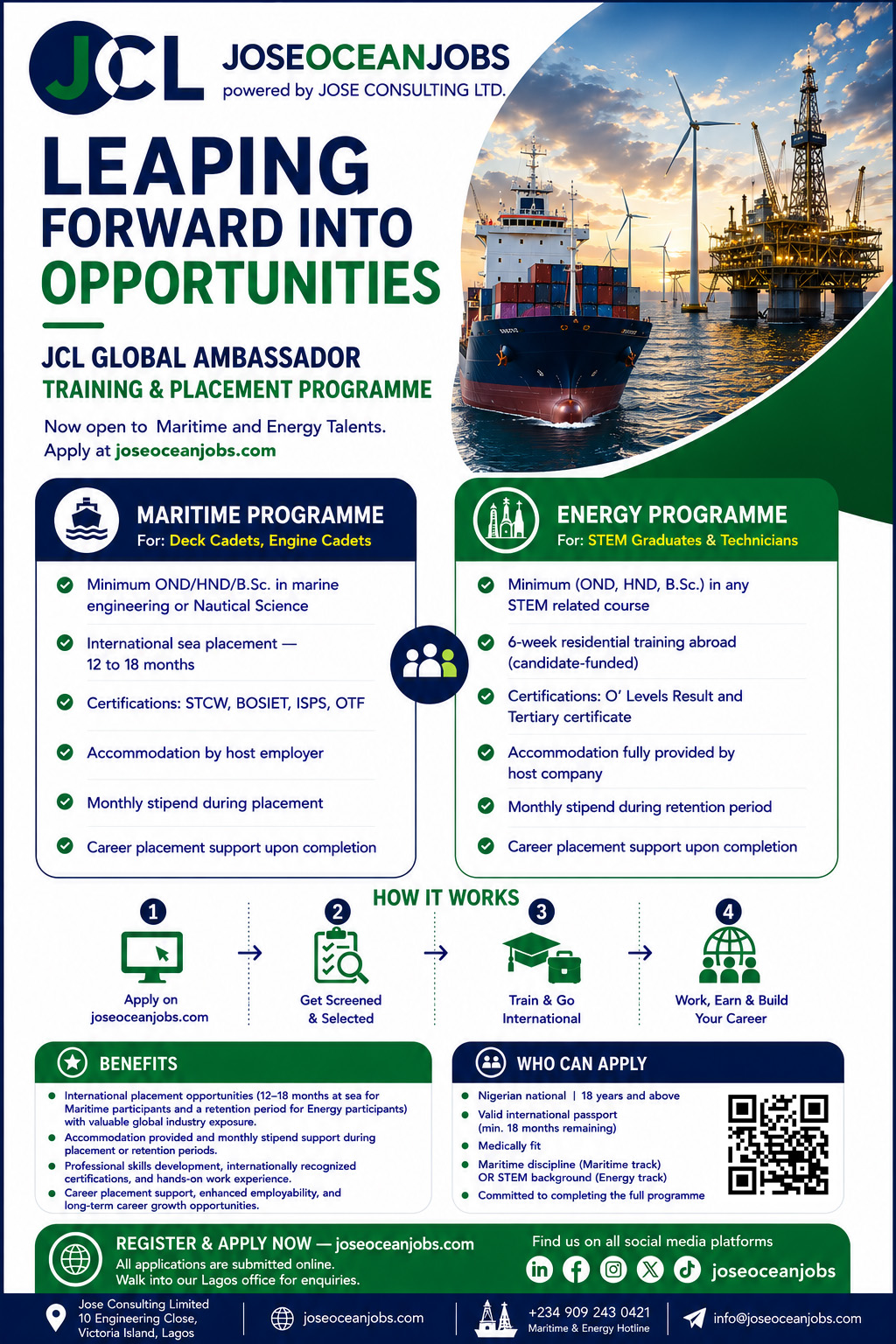
STCW is the foundation — but it's just the beginning. Depending on the role you're pursuing (deck, engine, or specialized departments), you may go on to need additional certifications such as BOSIET (for offshore roles) or advanced technical training specific to your position.
Think of STCW as your entry ticket. Everything else — technical skills, specialized certifications, sea time — builds on top of this baseline.
Ready to Start Your Maritime Career?
If you're serious about working at sea, STCW certification is where your journey begins. At JoseOceanJobs, we help aspiring seafarers understand exactly what certifications they need and connect them with the right training and placement pathways, and we offer the STCW training to get them there.
🚀 Leaping forward into opportunities. Train. Connect. Succeed.
Explore our training programmes →
Written by
JCL Editorial
Editorial team covering maritime hiring trends, offshore workforce policy, and certification updates relevant to JOSEOCEANJOBS candidates and employers.